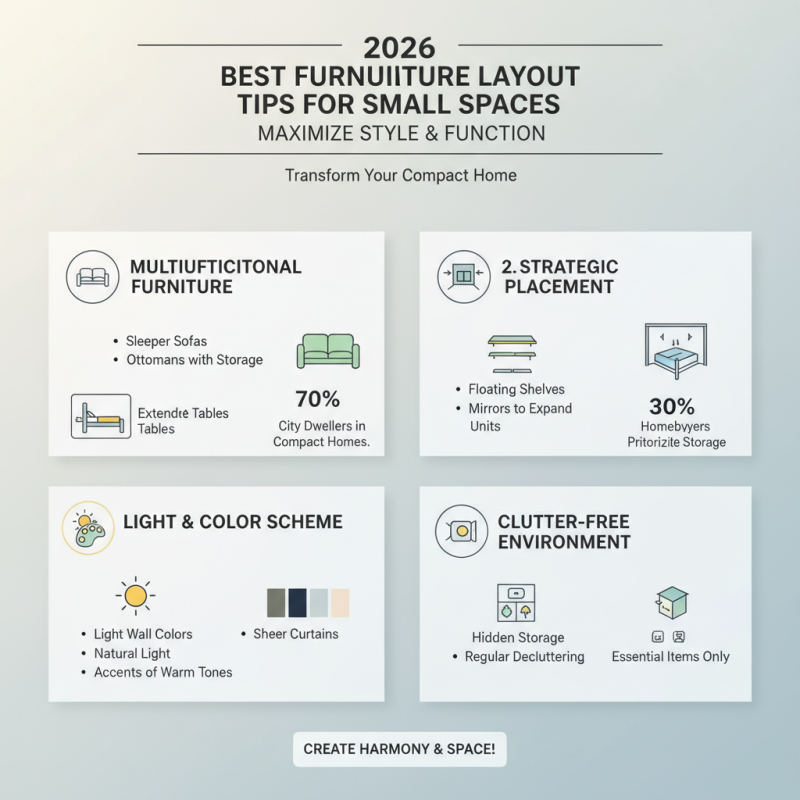
In today's urban living environment, maximizing small spaces is essential. A recent study indicates that approximately 70% of city dwellers live in compact homes. With the right Furniture Layout Tips For Small Spaces, you can optimize functionality without sacrificing style. This approach not only enhances the available space but also boosts homeowner satisfaction and comfort.
Creating a sense of openness in a small area requires strategic placement. For example, using multifunctional furniture can free up valuable floor space. According to interior design experts, incorporating stylish storage solutions is also crucial. In fact, 30% of homebuyers prioritize storage when selecting a property. Yet, many still struggle with layouts that feel cramped or cluttered. Reflecting on past mistakes, such as overcrowding furniture or poor color choices, can lead to better design decisions.
Ultimately, thoughtful furniture arrangement can transform the perception of small spaces. It's not just about fitting furniture in; it's about crafting a harmonious environment. Embracing innovative ideas allows for personal expression while addressing practical needs. Let's explore the best tips for achieving a stunning layout in your compact space.
Understanding the Unique Challenges of Small Space Furnishing
Furnishing small spaces presents unique challenges. Limited square footage often means every piece must serve a purpose. It’s essential to prioritize functionality while maintaining style. Consider multi-functional furniture, like a coffee table that doubles as storage. This approach maximizes utility without cluttering the area. Assess your needs carefully.
Creating a cohesive layout is crucial. Try to maintain flow and balance. Large furniture can overwhelm a small room. Instead, opt for lighter pieces. Use mirrors to create the illusion of space. They reflect light and make your area feel more open. Rearranging can lead to unexpected discoveries about your space’s potential.
This process is not without its frustrations. Finding the right arrangement can take time and experimentation. Don’t hesitate to try different configurations. Keep a flexible mindset. Each choice might reveal something new about your style or preferences. This journey is about discovering clarity amid constraints.
Key Principles of Furniture Layout Optimization for Small Areas
Optimizing furniture layout in small spaces is essential for creating functional and stylish environments. According to a report from the National Association of Home Builders, around 70% of homeowners feel limited by space. Effective furniture arrangement can significantly enhance the perception of space. When placing furniture, consider the flow of movement. Leave clear pathways to avoid clutter. A simple, open layout can make a small room appear larger.
Multifunctional furniture is another key principle. Pieces that serve dual purposes save space and add utility. For instance, a sofa bed can transform a living area into a guest room. The American Society of Interior Designers suggests that using scale-appropriate furniture prevents a cramped feel. Oversized items can overwhelm a small area, making it appear even smaller.
Color and lighting play equal roles in layout optimization. Light colors on walls and furniture can create an airy feel. Natural light is crucial; use mirrors to reflect it. A study from the Journal of Environmental Psychology found that well-lit spaces can improve mood and productivity. Remember, successful layout isn't just about aesthetics; it’s about comfort and ease of use. Making thoughtful choices can lead to both style and function.
Creative Solutions for Multi-functional Furniture Choices
In small spaces, multi-functional furniture is essential. According to a recent survey by the National Association of Home Builders, about 30% of homeowners prioritize versatility in furniture. This approach not only maximizes space but also adds style.
For instance, a sofa bed serves as both seating and sleeping options, which is ideal for accommodating guests.
Another practical solution involves nesting tables. These versatile pieces can be tucked away when not in use. When needed, they can provide extra surface area without overwhelming a room. A study from the American Institute of Architects supports the idea that adaptable furniture enhances room functionality. By combining style with utility, homeowners can create visually appealing spaces.
However, it’s crucial to avoid overcrowding. When using multi-functional pieces, balance is key. Too much furniture can lead to a cramped feeling. Reflecting on layout choices is essential. Consider how each piece serves its purpose and contributes to the overall aesthetic. Thoughtful adjustments can transform a cluttered space into a well-organized haven.
Color and Lighting Strategies to Enhance Small Space Aesthetics
When it comes to enhancing small spaces, color and lighting are crucial. A well-chosen color palette can make a room feel bigger. Light hues, like soft whites and pastels, reflect more light. Dark colors may create a cozy vibe but can also make a room feel smaller.
Consider adding mirrors on walls to amplify light. This strategy helps bounce natural light around. Another tip is to use layered lighting. Instead of relying solely on overhead lights, incorporate floor lamps and table lamps. Varied light sources create depth and warmth.
Don’t forget about the impact of accessories. Use colorful cushions or artwork to add personality without overwhelming the space. However, be cautious. Too many decorations can clutter. Aim for a balance between style and functionality, leaving some areas open to avoid a cramped feel.
Practical Tips for Measuring and Planning Your Furniture Arrangement
Measuring and planning your furniture arrangement in small spaces can be daunting. Start by measuring the room's dimensions. Use a tape measure to get accurate figures. Note any architectural features, such as windows or doors. This information is crucial for creating a functional layout.
Once you have measurements, sketch a floor plan. You can use graph paper or design software for better accuracy. Visualize the arrangement by placing scaled furniture cutouts on your plan. Experiment with different layouts to see what feels best. Remember, it's okay to make mistakes during this process. Not every arrangement will work on the first try.
When choosing furniture, think multi-functionality. Items that serve more than one purpose can save space and enhance usability. A sofa bed or an ottoman with storage can significantly increase the room’s functionality. Pay attention to scale and proportion as well. Large pieces in a small room can overwhelm the space. Reflect on how each piece contributes to the overall feel of your home.
2026 Best Furniture Layout Tips for Small Spaces to Maximize Style
| Tip Number |
Furniture Arrangement Tip |
Description |
Ideal Room Type |
| 1 |
Multi-Functional Furniture |
Use furniture that serves multiple purposes, such as a sofa bed or an ottoman with storage. |
Living Room, Bedroom |
| 2 |
Vertical Storage |
Utilize wall shelves and tall bookcases to draw the eye upward and save floor space. |
Home Office, Living Room |
| 3 |
Open Layout |
Create a seamless flow between rooms to make small spaces feel larger and more inviting. |
Studio Apartments, Small Homes |
| 4 |
Color Coordination |
Choose a cohesive color palette for furniture and decor to create harmony and visually expand space. |
Any Room |
| 5 |
Decluttering |
Regularly remove unnecessary items to maintain an open and airy environment. |
All Rooms |
FAQS
: Limited space means every piece must serve a purpose and maintain functionality.
Use multi-functional furniture, like storage coffee tables, to avoid clutter.
Maintaining flow and balance is essential for creating a harmonious space.
Large pieces can overwhelm a room, making it feel cramped and uncomfortable.
Mirrors reflect light and create the illusion of a larger, more open area.
Focus on clear pathways for movement to create an uncluttered environment.
Yes, light colors and natural light can make a space feel more airy and bright.
Good lighting, especially natural, is linked to improved mood and productivity.
Try different configurations; flexibility can reveal new styles and preferences.
Yes, experimentation may lead to unexpected discoveries about your space’s potential.
Conclusion
The article "2026 Best Furniture Layout Tips for Small Spaces to Maximize Style" explores essential strategies for optimizing furniture arrangements in limited areas. It begins by identifying the unique challenges faced when furnishing small spaces, such as the need for efficiency without sacrificing style. Key principles of furniture layout are discussed, focusing on how to maximize functionality and visual appeal in confined areas.
Additionally, the article highlights creative solutions for multi-functional furniture choices that serve dual purposes, enhancing both utility and aesthetics. It also emphasizes the significance of color and lighting in transforming small spaces, suggesting practical strategies to improve ambiance. Finally, practical tips for measuring and planning ensure that readers effectively implement these Furniture Layout Tips for Small Spaces, achieving a harmonious and stylish environment that meets their needs.

 GHENT Furniture