How to Choose Furniture for Cozy Cafes?

Time:2026-09-29 Author:Henry
0%

A cozy café is not created by soft cushions alone. It comes from choices that make guests feel welcome without blocking staff or crowding tables. Furniture Ideas For Cozy Cafes begins with the room itself: its footprint, daylight, busiest hours, and the sound of chairs moving across the floor. Measure before shopping. A beautiful chair can still be wrong.

Café furniture specialist Lena Hart offers a useful guiding line: “Choose pieces that invite guests to settle in, but let the room keep moving.” That balance matters. A two-seat table beside a window may suit slow mornings, while durable stools can serve a narrow counter. Check seat height against table height, test chair stability, and look for surfaces that wipe clean. Small details count.

The best choice is rarely the most photogenic one. It should feel comfortable after a full cup of coffee, hold up to daily use, and leave a clear path to the counter. Comfort matters. So does maintenance. Consider rounded edges, sturdy joints, and upholstery that will not show every crumb. And be honest about trade-offs: a plush bench may look inviting, yet it can make cleaning harder. This outline explores how to weigh comfort, durability, layout, and style—without pretending one furniture plan suits every café.
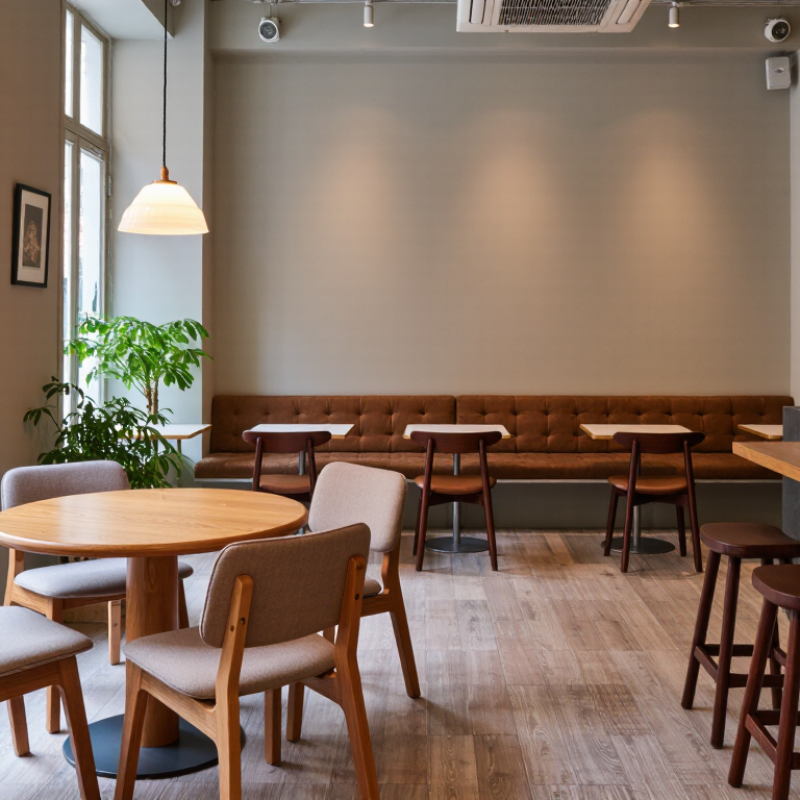
How to Choose Furniture for Cozy Cafes?

Assess the Cafe’s Space, Layout, and Customer Needs

How to Choose Furniture for Cozy Cafes?

Assess the Cafe’s Space, Layout, and Customer Needs

Before choosing furniture, measure the cafe’s usable floor area, entrances, windows, and service counter. A beautiful chair can still obstruct movement. Leave clear paths between tables, and check local accessibility requirements before finalizing the layout. Customers should not squeeze past seated guests to reach the restroom.

Consider how people actually use the space. Morning visitors may need small tables for quick coffee, while remote workers often prefer supportive chairs and nearby power outlets. Families need wider pathways and stable seating. Softer benches can make a narrow corner inviting, but they may slow cleaning during busy hours. Keep staff sightlines open, especially near entrances and high-traffic areas.

I once saw a cafe use oversized tables in a small room. The space looked luxurious, yet customers kept moving chairs to pass. That mistake was expensive to fix. Test the layout with paper outlines or temporary furniture before ordering. Sit in different seats and notice glare, noise, knee space, and table height. Furniture should feel comfortable after twenty minutes, not only attractive in photographs. Some unevenness is useful. Real spaces rarely behave perfectly, so observe, adjust, and question your first plan.

Choose Seating That Supports Comfort and Different Visit Lengths

Comfort depends on how long guests plan to stay. A quick espresso needs a stable chair and an easy exit; a lingering brunch calls for supportive backs and enough room to shift posture. Mix compact two-seat tables with a few deeper, cushioned seats. Keep walkways clear, and avoid placing every soft chair in the busiest traffic path. Small detail, big difference.

Durability matters, too. ANSI/BIFMA X5.4-2020 sets performance tests for lounge and public seating, offering a useful reference when comparing chairs for repeated daily use. For accessible dining, the 2010 ADA Standards require at least 5% of dining surfaces, with a minimum of one, to comply; compliant surfaces are 28 to 34 inches high. Check local requirements before ordering. A common misstep is choosing one seat style for the whole room. It may look tidy, but it can leave short-stay guests waiting for a table while longer visits feel cramped. Test chairs with different body types and real table heights. The first layout may still need adjustment.

Select Tables and Furniture for Efficient Service and Flexible Use

How to Choose Furniture for Cozy Cafes?

Select Tables and Furniture for Efficient Service and Flexible Use

A cozy cafe must also move quickly. Furniture should support clear paths, fast cleaning, and easy changes. Measure the service route from the counter to each table before buying anything. Leave enough space for staff carrying hot drinks. Do not trust a showroom layout. It often hides real crowding. Test one table with two chairs, a tray, and a cleaning cloth. That small trial reveals awkward corners.

Choose tables in several sizes instead of one repeated shape. Two-top tables can join for groups or separate during quiet hours. Round tables soften narrow corners, while rectangular tables use walls more efficiently. Lightweight furniture helps staff reset the room without strain. However, very light tables may move when customers lean on them. Stability matters more than easy lifting. Chairs should stack or slide neatly under tables. Avoid deep upholstery if daily cleaning is demanding. Sealed wood, durable laminate, and washable surfaces usually support faster turnover. Check every joint for wobble. People notice unstable furniture immediately.

Staff feedback is practical evidence. Ask where trays collide, where bags block aisles, and which chairs become uncomfortable after an hour. I once preferred elegant, heavy chairs, but employees found them difficult to move. That choice looked refined and worked poorly. Reconsider the layout after busy weekends. Customer comfort and service speed can change with real use. A flexible cafe may need fewer decorative pieces and more useful space.

How to Choose Furniture for Cozy Cafes

Typical tabletop footprints by seating capacity help balance guest comfort with efficient use of floor space.

These are illustrative common planning sizes, not universal standards: a 60 × 60 cm table has a 0.36 m² top, a 75 × 75 cm table has a 0.56 m² top, and a 75 × 120 cm table has a 0.90 m² top. Smaller, movable tables are easier to rearrange; check clearances and local accessibility requirements before finalizing a layout.

Compare Materials for Durability, Maintenance, and Cozy Appeal

Choosing café furniture means balancing durability, maintenance, and emotional warmth. Wood creates visible grain, softer acoustics, and a welcoming touch. However, unfinished wood absorbs coffee, milk, and cleaning moisture quickly. Sealed hardwood performs better, but its finish still needs inspection around table edges. Powder-coated metal handles heavy use well and wipes clean in seconds. It can feel cold, though. Add upholstered seats or timber details to soften the room.

The 2024 State of the Restaurant Industry report found that 77% of operators considered recruiting and retaining staff a major challenge. Furniture that cleans quickly can reduce pressure during busy shifts. High-performance laminate suits tabletops because it resists stains and requires simple wiping. Textured plastics hide small scratches, but low-quality surfaces may look tired within months. Commercial upholstery should use tightly woven, cleanable fabric, with replaceable seat covers where possible. Comfort matters commercially: the same report found that nearly two-thirds of adults view restaurants as important places for social connection. A café needs more than attractive chairs.

A practical test helps. Spill water, drag a sample, and sit for ten minutes. Check the edges.

Material choices are rarely perfect. I often underestimate how quickly chair corners wear near narrow aisles. That detail deserves more attention than a showroom photograph. Use lighter finishes carefully; they reveal crumbs, but dark finishes reveal dust and fingerprints. Small imperfections are acceptable. Neglected maintenance is not.

Arrange Furniture to Balance Ambience, Flow, and Accessibility

How to Choose Furniture for Cozy Cafes?

A cozy cafe needs more than soft chairs and warm colors. Furniture should shape a comfortable, accessible movement pattern. Start by mapping the entrance, ordering counter, tables, restrooms, and emergency routes. Leave clear paths between these areas, especially near corners and chair backs. Guests should not squeeze past seated customers while carrying hot drinks. Staff also need space to serve safely during busy periods. I usually observe the room during a lunch rush, because an empty cafe can hide serious flow problems.

Mix seating types to support different needs. Two-seat tables suit quiet conversations, while communal tables encourage social energy. Add chairs with supportive backs for longer visits. Low lounge seats may look inviting, but they can be difficult for older guests to use. Keep some tables easy to approach and adjust, with enough legroom for mobility devices. Check local accessibility requirements, since practical compliance should guide the layout. Comfort is personal, too. I once favored narrow tables to save space, but customers found them awkward and crowded.

Tips: Measure every aisle before buying furniture. Test one complete table setting first. Sit down, stand up, and carry a tray through the space. Watch where bags, strollers, and coats collect. Remove anything that causes hesitation. Leave a little flexibility, because the perfect arrangement rarely survives real service.

How to Choose Furniture for Cozy Cafes? - Arrange Furniture to Balance Ambience, Flow, and Accessibility

Furniture Planning Factor Recommended Target Practical Range Effect on Ambience and Flow Accessibility Check
Primary circulation route At least 36 in (914 mm) clear width 36–48 in (914–1,219 mm) Creates a calm, easy-to-read layout and reduces conflicts between guests and staff. A 36 in clear accessible route is a common minimum under accessibility standards; measure between finished obstructions.
Passing or high-traffic aisle 42 in (1,067 mm) clear width 42–60 in (1,067–1,524 mm) Allows guests, servers, and mobility devices to pass with less interruption to seated customers. Use the wider end near entrances, counters, toilets, and service stations.
Two-person café table 24 × 30 in (610 × 762 mm) 24–30 in wide × 24–36 in long Supports intimate seating while allowing flexible combinations for larger groups. Choose tables that can be moved without creating unstable or obstructive arrangements.
Dining table height 28–30 in (711–762 mm) 28–34 in (711–864 mm) Provides a familiar, comfortable posture for meals, laptops, and longer visits. Accessible dining surfaces commonly require a 28–34 in high usable surface.
Accessible dining position At least 30 in wide × 48 in deep floor space 30–36 in wide × 48–60 in deep Integrates inclusive seating into the main dining area instead of isolating it. Keep the position connected to the accessible route and free from chair legs or décor.
Wheelchair knee clearance 27 in high × 30 in wide × 19 in deep Use these as minimum clearances Makes selected tables genuinely usable without compromising the visual balance of the room. Verify that aprons, pedestal bases, and crossbars do not reduce the clear space.
Chair-to-table clearance 10–12 in (254–305 mm) between seat and tabletop 9–13 in (229–330 mm) Improves comfort and reduces the need for guests to pull chairs into circulation paths. Test the actual chair and table combination rather than relying only on product dimensions.
Seat spacing at shared tables 24 in (610 mm) table edge per diner 22–30 in (559–762 mm) Balances efficient capacity with personal space and a less crowded atmosphere. Avoid placing fixed dividers or chair arms where they restrict transfers or approach space.
Counter or bar seating 30–34 in (762–864 mm) accessible counter section 34–42 in for standard counter areas Adds visual energy and solo seating without making the entire room feel dense. Provide an accessible section with knee clearance and a connected clear floor area.
Furniture flexibility Keep at least 10–15% of tables movable Use lightweight tables under 35 lb where practical Allows the café to shift smoothly between quiet periods, peak service, and group bookings. Do not use movable furniture to block required accessible routes, turning areas, or exits.

Planning note: Dimensions are practical café-planning benchmarks. Accessibility requirements can vary by location and building type; confirm the final layout with the applicable local code and accessibility standard.

FAQS

What should be measured before choosing cafe furniture?

Measure the usable floor area, entrances, windows, counter, and main walking routes. Clear paths matter.

How can furniture support different customer needs?

Use small tables for quick visits, supportive chairs for remote work, and wider paths for families. Power access helps too.

How much space should remain between tables?

Leave enough room for customers and staff to pass without squeezing beside seated guests. Test real movement.

Why should the layout be tested before ordering furniture?

Paper outlines or temporary furniture can reveal blocked paths, glare, noise, and limited knee space. Looks can mislead.

What table shapes work well in a cozy cafe?

Use two-person tables for flexible seating, round tables for corners, and rectangular tables along walls. Mix the shapes.

How can furniture improve service speed?

Keep routes from the counter to tables clear, especially for staff carrying hot drinks. Avoid awkward corners.

What furniture features make cleaning easier?

Choose washable surfaces, sealed wood, durable laminate, and chairs that slide neatly under tables. Deep upholstery slows cleaning.

Should cafe furniture be lightweight?

Lightweight pieces help staff reset the room, but unstable tables create problems when customers lean. Stability matters more.

How can staff feedback improve the furniture plan?

Ask where trays collide, bags block aisles, or chairs become uncomfortable after long shifts. Employees notice hidden problems.

When should a cafe reconsider its furniture layout?

Review the arrangement after busy weekends because comfort and service speed may change with real use. The first plan may fail.

Conclusion

Choosing furniture for a cozy cafe starts with understanding the space, its layout, and the needs of its customers. Measure the room and consider how people will move through it before selecting seating. A mix of comfortable chairs, benches, and smaller seats can accommodate quick coffee stops as well as longer visits, while thoughtful table sizes make it easier for guests to dine, work, or meet.

When exploring Furniture Ideas For Cozy Cafes, balance inviting style with practical needs. Choose durable materials that are easy to maintain and still contribute warmth and character. Flexible tables and lightweight furniture can help staff serve efficiently and allow the layout to adapt throughout the day. Arrange each piece to create a welcoming atmosphere while keeping pathways clear and ensuring guests can move around comfortably.

Henry

Henry

Henry is a dedicated marketing professional with a profound expertise in the company's offerings. With years of experience in the industry, he possesses an impressive understanding of the market dynamics and consumer behaviors that drive success. Henry is committed to sharing his insights through......